

Attack encyclopedia
Norsk Hydro - how an aluminium giant defeated ransomware without paying ransom
The LockerGoga ransomware attack on Norsk Hydro (March 2019) - chronology, switch to manual operations, USD 35-41M losses in Q1, the decision to refuse ransom payment, and transparent communication as the gold standard of incident response.
 Józef Sulwiński
Published 7 min read
Contents
December 2018. An employee at Norsk Hydro - a Norwegian aluminium giant with 35,000 employees in 40 countries - opens an email attachment from a trusted business partner. Nothing unusual. Everyday corporate routine. Except this particular attachment had been intercepted and weaponised by a criminal group. Inside - a trojan that silently installs itself on the workstation and begins listening.
For three months nobody will notice. And when they finally do, it will be too late to prevent it. It will not, however, be too late for something else - a decision that will go down in cybersecurity history as the “gold standard” of incident response.
Three months of silence
From December 2018 to March 2019 the attackers moved through Norsk Hydro’s infrastructure with the precision of a cartographer. The trojan installed on a single workstation served as a foothold. The following weeks were spent on reconnaissance, privilege escalation, and lateral movement across the corporate network. The goal was to obtain domain administrator credentials for Active Directory - the keys to the entire kingdom.
And here we come to the mechanism that makes this attack particularly instructive. The attackers did not need to install ransomware on each computer individually. It was enough to take control of Active Directory and use Group Policy Object (GPO) - a native Windows mechanism for centrally managing workstation configurations - to deploy malware simultaneously on thousands of machines. The company was attacked using its own management infrastructure.
19 March 2019 - a morning nobody planned for
On the night of 18-19 March 2019, the LockerGoga ransomware struck. Employees arriving at offices and factories in 170 locations worldwide found printed notices with a warning: do not connect to corporate systems.
LockerGoga - ransomware encrypting files with RSA-4096 and AES-256 algorithms, changing extensions to .locked - hit 22,000 computers. ERP systems, email, and production management systems were all locked. In aluminium smelters, where processes require continuous temperature and alloy composition monitoring, the loss of digital systems meant an immediate threat to production continuity.
TIP
LockerGoga is the same ransomware that in January 2019 attacked the French consulting firm Altran Technologies and in March hit the American chemical companies Hexion and Momentive. The Norsk Hydro attack was, however, the largest and most widely reported operation using this malware.
Three decisions made within hours
At an emergency board meeting, Norsk Hydro made three decisions that define this entire story.
First: do not pay the ransom. Management concluded that payment did not guarantee data recovery and would only encourage criminals to launch further attacks. They also suspected - correctly - that the attackers would come back for more.
Second: call Microsoft. The Microsoft Detection and Response Team (DART) was engaged to analyse the incident and help restore systems from backups.
Third: tell the truth. Instead of the standard corporate strategy of minimising and concealing, Norsk Hydro chose full transparency. Daily press conferences at headquarters in Oslo. Daily webcasts for employees and partners with Q&A sessions. Journalists invited into operations centres. A new company website launched within the first week of the attack - because the old one was inaccessible. Communication via Facebook, because internal channels were down.
This was the opposite of what most attacked organisations do. And that is precisely why it went down in history.
Back to pens and paper
The most dramatic aspect of the attack did not play out in server rooms. It played out on production floors.
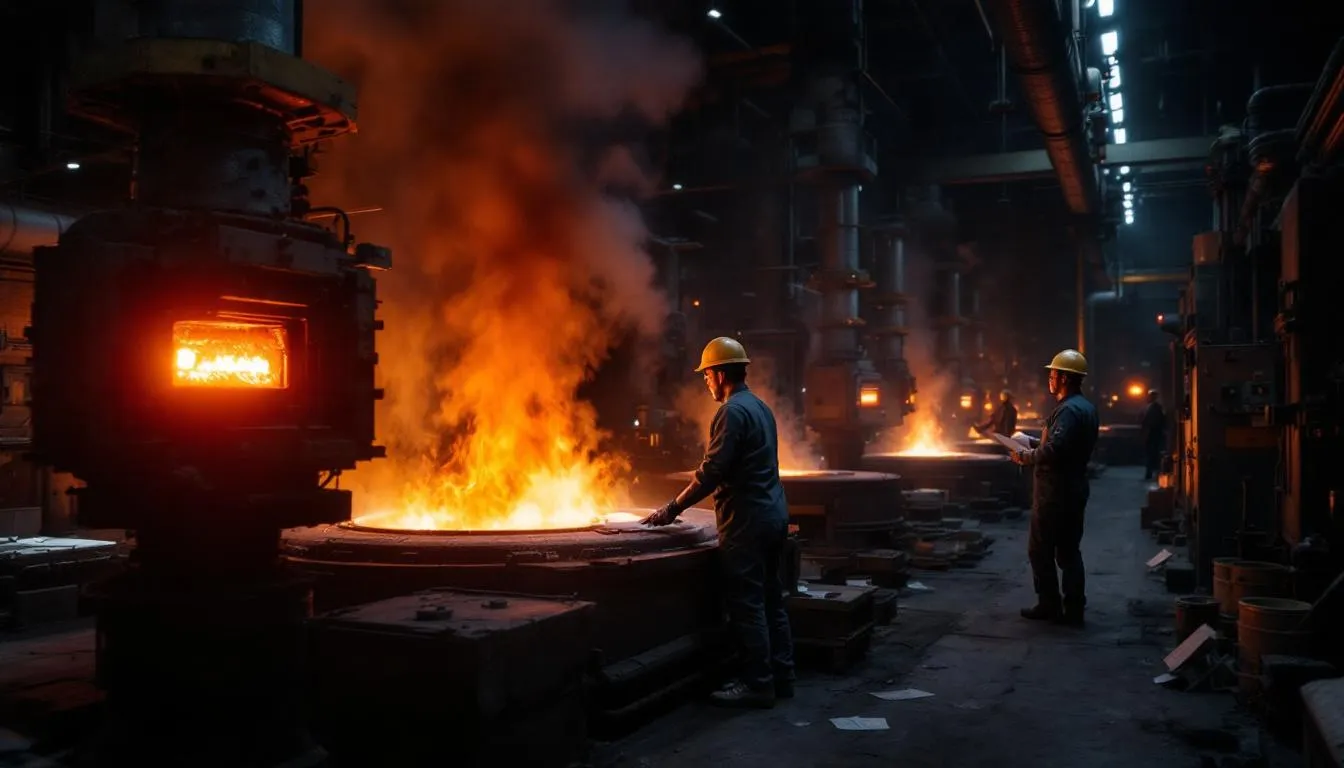
Norsk Hydro is an aluminium producer. Smelters, rolling mills, extrusion lines - industrial processes that cannot simply “wait.” Aluminium in furnaces melting at temperatures above 960 degrees Celsius does not wait for IT systems to be restored.
The company switched to manual operations. 35,000 employees in 40 countries reached for pens, paper, whiteboards, and - as witnesses reported - operating manuals printed from archives predating the digital era. Orders were taken by phone. Production schedules were written by hand. Process parameters were read directly from gauges on machines instead of from SCADA screens.
It worked - but not without losses. Some automated production lines had to be shut down entirely. Efficiency dropped. Delivery dates slipped.
The bill
Financial losses grew with each quarterly report. Initial estimates spoke of USD 35-41 million (NOK 300-350 million) for the first quarter of 2019 alone. In the second quarter another USD 23-29 million was added. The final figure that Norsk Hydro reported in its annual accounts approached USD 70-75 million.
Insurance covered only part of the losses. The company had to rebuild its IT infrastructure virtually from scratch - replace thousands of workstations, rebuild Active Directory, restore data from backups. Full system restoration took months.
And yet - Norsk Hydro did not pay a single krone in ransom.
Crisis chronology
| Date | Event |
|---|---|
| December 2018 | Employee opens an infected attachment from a trusted partner; trojan installs on the workstation |
| December 2018 - March 2019 | Attackers conduct reconnaissance, escalate privileges, gain access to Active Directory |
| 18 March 2019 (evening) | LockerGoga deployed via GPO to 22,000 computers in 170 locations |
| 19 March 2019 (morning) | Employees find warning notices; the board decides to refuse payment |
| 19-22 March 2019 | Switch to manual operations; Microsoft DART begins analysis and restoration |
| March-April 2019 | Daily press conferences, webcasts, communication via Facebook |
| Q1 2019 | Estimated losses: USD 35-41M |
| Q2 2019 | Additional losses: USD 23-29M |
| Late 2019 | Full IT system restoration; total losses: approx. USD 70-75M |
Lessons that outlasted the headlines
1. Active Directory is target number one
The attackers did not look for vulnerabilities in OT systems. They did not try to take over PLC controllers. They went after Active Directory - the heart of identity and access management in a Windows environment. Whoever controls AD controls every computer in the domain. Regular privilege audits, administrative account segmentation, and GPO change monitoring are not “nice to have” - they are a line of defence without which any organisation is exposed to LockerGoga-style attacks.
2. Backups saved the company
Norsk Hydro could refuse to pay the ransom because it had up-to-date backups isolated from the production network. Had the backups been connected to the same AD domain, they would have been encrypted along with everything else. The 3-2-1 rule (three copies, two media types, one copy offline) is not theory - it is a condition for survival. We describe more about ransomware protection strategies in our ransomware guide.
3. The ability to operate manually is an insurance policy
35,000 people switched to pens and paper - and the company survived. Not because it was convenient, but because someone had previously anticipated the possibility. Emergency procedures, paper-format operating manuals, trained personnel capable of working without systems - these are resilience elements that no firewall can replace.
4. Transparency builds trust, not destroys it
Corporate instinct says: stay quiet, minimise, control the narrative. Norsk Hydro did the opposite - and earned recognition from the industry, regulators, and the public. Cybersecurity experts worldwide, including law enforcement agencies, called this response the “gold standard.” Transparency not only did not damage the company’s reputation - it strengthened it.
Summary
The attack on Norsk Hydro was neither the most expensive (NotPetya cost Maersk over USD 300 million) nor the most high-profile (Colonial Pipeline paralysed fuel supplies for 50 million people). It was, however, the incident that yields the most practical takeaways:
- Taking over Active Directory allows simultaneous encryption of thousands of machines via the native GPO mechanism.
- Refusing ransom payment is realistic - if you have up-to-date, isolated backups.
- Manual operations can maintain business continuity during system restoration - but require advance preparation.
- Transparent communication protects reputation more effectively than silence.
Norsk Hydro proved that it is possible to go through a global-scale ransomware attack, not pay a penny to the attackers, and emerge from the crisis stronger. But this story began with one opened attachment. One email. One click.
Sources
- Hackers hit Norsk Hydro with ransomware. The company responded with transparency - Microsoft
- Norsk Hydro responds to ransomware attack with transparency - Microsoft Security Blog
- How One Company Refused to Let Its Cyberattackers Win - TIME
- Cyber-attack on Hydro - Hydro.com
- Ransomware Attack Costs Norsk Hydro Tens of Millions of Dollars - SecurityWeek
- LockerGoga Ransomware Attack on Norsk Hydro 2019 - Idaho National Laboratory / CyOTE
- Frontline Insights: The Norsk Hydro cyberattack - DNV
- How to maintain full treasury operations in the midst of a cyber-attack - J.P. Morgan
Need help in this area?
Our experts will help you assess the risk and plan next steps.