

Attack encyclopedia
TEMP.Veles - the Russian group that attacked human safety systems
TEMP.Veles (G0088) - analysis of the Russian APT group linked to the CNIIHM institute, responsible for the TRITON attack on SIS systems in a Saudi refinery.
 Józef Sulwiński
Published 7 min read
Contents
In the MITRE ATT&CK threat group catalogue, under designation G0088, there is an entity whose activity forces a fundamental question about the limits of cyber operations. Most APT groups steal data. Some sabotage industrial processes. TEMP.Veles - the group in question - was the first in documented cybersecurity history to deliberately attack Safety Instrumented Systems (SIS), which represent the last barrier between a controlled industrial process and a disaster capable of killing people.
This is not a group that encrypts files for ransom. This is not a group that steals intellectual property. This is a group that - had it succeeded - could have caused a refinery to explode.
Who are TEMP.Veles
TEMP.Veles is the designation assigned by Mandiant (then FireEye) to the group responsible for developing and deploying the TRITON malware - the most dangerous known malicious software targeting industrial control systems. The group is also known as XENOTIME (Dragos designation).
MITRE ATT&CK catalogues it as G0088, associating it with the following software: TRITON (S1009) and toolkits for penetrating IT and OT networks.
The key question from the outset was: who is behind TEMP.Veles? The answer presented by Mandiant in October 2018 pointed to one of the most troubling connections in the history of cyber espionage.
CNIIHM - the institute that builds weapons and malware
The Central Scientific Research Institute of Chemistry and Mechanics (CNIIHM, Russian: ЦНИИХМ) is a Russian state research institute located in Moscow at 16a Nagatinskaya Street. Officially the institute works on “critical infrastructure protection” and the development of weapons and military equipment. It reports to the Ministry of Trade and Industry of the Russian Federation.
Mandiant assessed with high confidence that CNIIHM supported the intrusion activity leading to the deployment of TRITON. The evidence included several independent paths:
The PDB path. Analysis of binary files from testing tools used by TEMP.Veles revealed PDB (Program Database) paths containing a username linked to a specific researcher. This individual had been active in Russian information security communities since at least 2011 and had ties to CNIIHM.
The IP path. An IP address registered to CNIIHM was used by TEMP.Veles for multiple purposes: monitoring public reports about TRITON, network reconnaissance, and supporting malicious activity directly related to the TRITON intrusion.
Institutional competencies. CNIIHM has research departments specialising in critical infrastructure protection, and its declared mission covers areas directly related to the knowledge needed to develop TRITON - understanding of process safety systems, SIS controller communication protocols, and industrial network architectures.
Post-publication reaction. After Mandiant published its report in October 2018, SecurityWeek researchers documented the hasty removal of digital traces by individuals linked to CNIIHM - deleting profiles, modifying websites. This is a classic reaction confirming the accuracy of the attribution.
A detailed analysis of the TRITON malware itself - its architecture, communication method with Triconex controllers, and the course of the attack at the Saudi refinery - is described in a separate article: TRITON (TRISIS) - malware that attacked human safety systems.
Anatomy of the TEMP.Veles operation
The operation that led to the deployment of TRITON in a Saudi petrochemical refinery was not a one-off attack. It was a multi-year, multi-phase campaign requiring deep knowledge of industrial systems.
Phase 1 - IT network penetration
TEMP.Veles gained initial access to the victim’s corporate network - likely through spearphishing or exploitation of an internet-facing service. From the corporate network the group moved into the OT network, exploiting insufficient segmentation between zones.
Phase 2 - Reconnaissance in the OT network
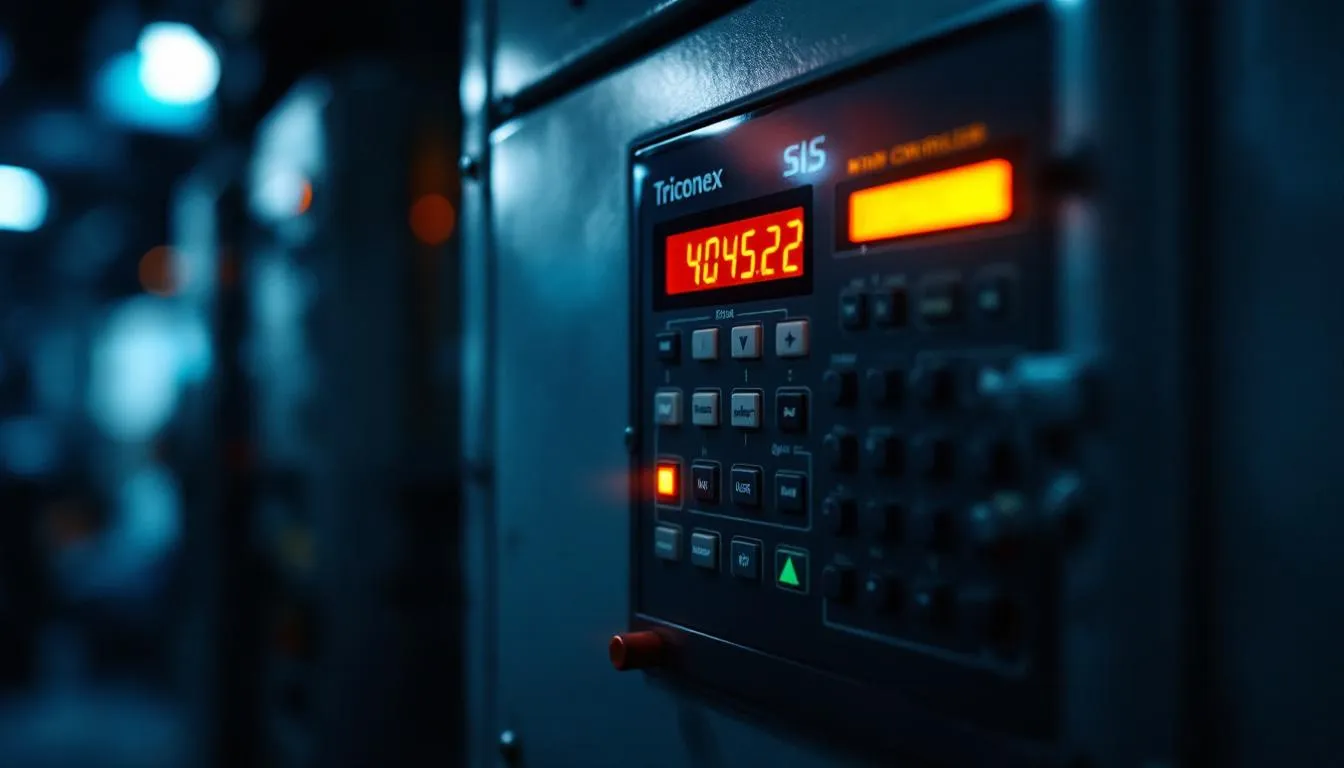
After entering the OT network, the attackers conducted reconnaissance over an extended period - identifying the architecture of the control system, controller types, firmware versions, and network topology. The key target was Schneider Electric Triconex 3008 series controllers managing the refinery’s SIS.
Phase 3 - Development of TRITON
Based on the collected information, TEMP.Veles developed (likely in a laboratory environment at CNIIHM) a dedicated TRITON framework - capable of communicating with Triconex controllers via their native TriStation protocol, reading and overwriting safety logic, and manipulating the controller state.
Phase 4 - Deployment
In August 2017 TRITON was deployed in the refinery’s network. The malware attempted to modify the logic of SIS controllers - likely in order to disable automatic safeguards that, in the event of a process failure, would shut down the installation and prevent a disaster.
The attack was detected by accident - a bug in TRITON’s code caused the Triconex controller to enter a safe state, which halted production and alerted operators. Had the code worked flawlessly, the manipulation could have gone undetected.
Why TEMP.Veles changes the rules
Before TEMP.Veles, known cyberattacks on industrial systems - Stuxnet, Industroyer, BlackEnergy - targeted production or distribution processes. They were destructive but were not directly designed to endanger human life.
TEMP.Veles crossed that line. The SIS system in a petrochemical refinery exists to immediately shut down the installation in the event of a dangerous deviation in process parameters - pressure, temperature, substance levels - before an explosion, a toxic substance leak, or a fire can occur. Disabling the SIS does not directly cause a disaster - but it removes the last automatic barrier that prevents one.
The analogy is simple: it is like cutting the brakes on a car. The car keeps moving. But the next bend may be the last.
MITRE ATT&CK techniques
MITRE ATT&CK for ICS documents techniques used by TEMP.Veles, including:
| Technique | ID | Description |
|---|---|---|
| Spearphishing Attachment | T1566.001 | Probable entry vector into the IT network |
| Remote Services | T0886 | Lateral movement between IT and OT zones |
| Program Download | T0843 | Uploading modified logic to SIS controllers |
| Modify Controller Tasking | T0821 | Changing safety logic of Triconex controllers |
| Safety System Alarm Suppression | Related | Suppressing safety system alarms |
Lessons from the TEMP.Veles operation
Safety systems must be independent
The fact that TEMP.Veles managed to reach from the IT network to SIS controllers indicates insufficient isolation of safety systems. The IEC 61511 standard requires SIS to be independent of the Basic Process Control System (BPCS). In practice, many operators connect them on the same network - which the TRITON attack brutally exposed.
OT network monitoring is a necessity
TEMP.Veles’ activities in the OT network lasted months. Dedicated tools for monitoring traffic in industrial networks - detecting anomalies in controller communications, unauthorised configuration reads, and attempts to upload new logic - could have alerted the security team much earlier.
Attribution has strategic significance
Linking TEMP.Veles to a Russian state research institute means we are not dealing with an independent criminal group but with an operation supported - or directly conducted - by the state apparatus. This changes the risk calculus for every critical infrastructure operator.
Summary
TEMP.Veles/G0088 is a group whose very existence should change the way critical infrastructure operators think about security. Not because their tools are the most advanced - although TRITON was a high-calibre piece of engineering. But because their goal was not espionage or production sabotage. Their goal was to disable systems that protect people from death.
For anyone who manages process safety systems - in refineries, power plants, chemical facilities - TEMP.Veles is not an abstract threat from a threat intelligence report. It is proof that someone - with the resources of a state behind them - is actively working to make those systems stop functioning.
Sources
- TEMP.Veles, XENOTIME, Group G0088 - MITRE ATT&CK
- TRITON Attribution: Russian Government-Owned Lab Most Likely Built Custom Intrusion Tools - Mandiant
- Russian Hackers Scrambled to Erase Digital Footprints After Triton Attribution Report - SecurityWeek
- FireEye links Russia-owned lab to group behind Trisis - CyberScoop
- FireEye: Russian Research Lab Aided the Development of TRITON Industrial Malware - The Hacker News
- Triton Malware Linked to Russian Government Research Institute - SecurityWeek
Need help in this area?
Our experts will help you assess the risk and plan next steps.